Learning Outcomes
By the end of this lesson, students should be able to:
i. Define combustion analysis and explain its significance in determining the elemental composition of organic compounds.
ii. Describe the apparatus and equipment used in combustion analysis, including the combustion train and its components.
iii. Explain the procedure of combustion analysis step by step, including sample preparation, combustion, and product collection.
iv. Calculate the percentage composition of each element present in the organic compound based on the mass of the combustion products.
v. Appreciate the importance of combustion analysis as a fundamental technique in organic chemistry for understanding the structure and composition of organic compounds.
Introduction
Organic compounds, the building blocks of life, are composed of various elements, primarily carbon, hydrogen, and oxygen. Understanding the elemental composition of an organic compound is crucial for its identification, synthesis, and understanding its chemical properties. Combustion analysis, a fundamental technique in organic chemistry, provides a direct and accurate method for determining the elemental composition of organic compounds.
i. Combustion Analysis: Unveiling the Elemental Fingerprint
Combustion analysis involves the complete combustion of an organic compound in a controlled environment, followed by the collection and analysis of the combustion products. These combustion products, typically carbon dioxide (CO2) and water (H2O), provide valuable information about the elemental composition of the original compound.
ii. Apparatus and Equipment: The Combustion Train
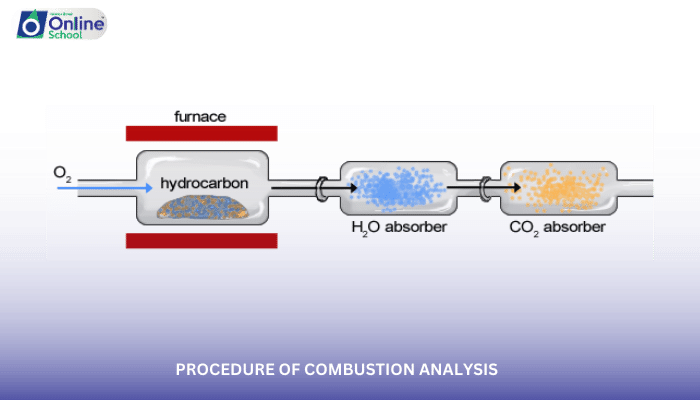
The combustion train, the heart of combustion analysis, is a series of interconnected components designed to efficiently combust the sample and collect the combustion products:
Combustion Tube: The combustion tube, made of heat-resistant material, is where the sample undergoes combustion in a stream of oxygen.
Drying Tube: The drying tube, filled with a desiccant, removes moisture from the combustion gases, ensuring accurate measurement of CO2.
Bubbler: The bubbler, filled with a strong base, absorbs CO2, converting it into carbonate ions.
Guard Tube: The guard tube, filled with a drying agent, protects the bubbler from moisture and ensures complete absorption of CO2.
iii. Procedure: A Step-by-Step Guide
Combustion analysis involves a meticulous procedure to ensure accurate results:
Sample Preparation: Weigh a known mass of the pure, dry organic compound.
Combustion: Place the sample in the combustion tube and connect it to the combustion train. Pass oxygen through the tube, combusting the sample completely.
Product Collection: Collect the combustion products, CO2 and H2O, in the bubbler and drying tube.
Mass Measurement: Weigh the bubbler and drying tube to determine the mass of CO2 and H2O produced.
iv. Calculations: Unveiling the Elemental Composition
Based on the mass of CO2 and H2O produced, calculate the mass of carbon and hydrogen present in the original compound. Use the molar masses of CO2, H2O, and the organic compound to determine the mole ratio of each element. Finally, calculate the percentage composition of each element in the organic compound.
Combustion analysis, a cornerstone of organic chemistry, provides a valuable tool for determining the elemental composition of organic compounds. Through a systematic procedure and careful calculations, the elemental fingerprint of an organic compound is revealed, unlocking its structural identity and chemical properties. As chemists continue to explore the vast realm of organic compounds, combustion analysis will remain an indispensable technique for understanding the fundamental building blocks of life.
